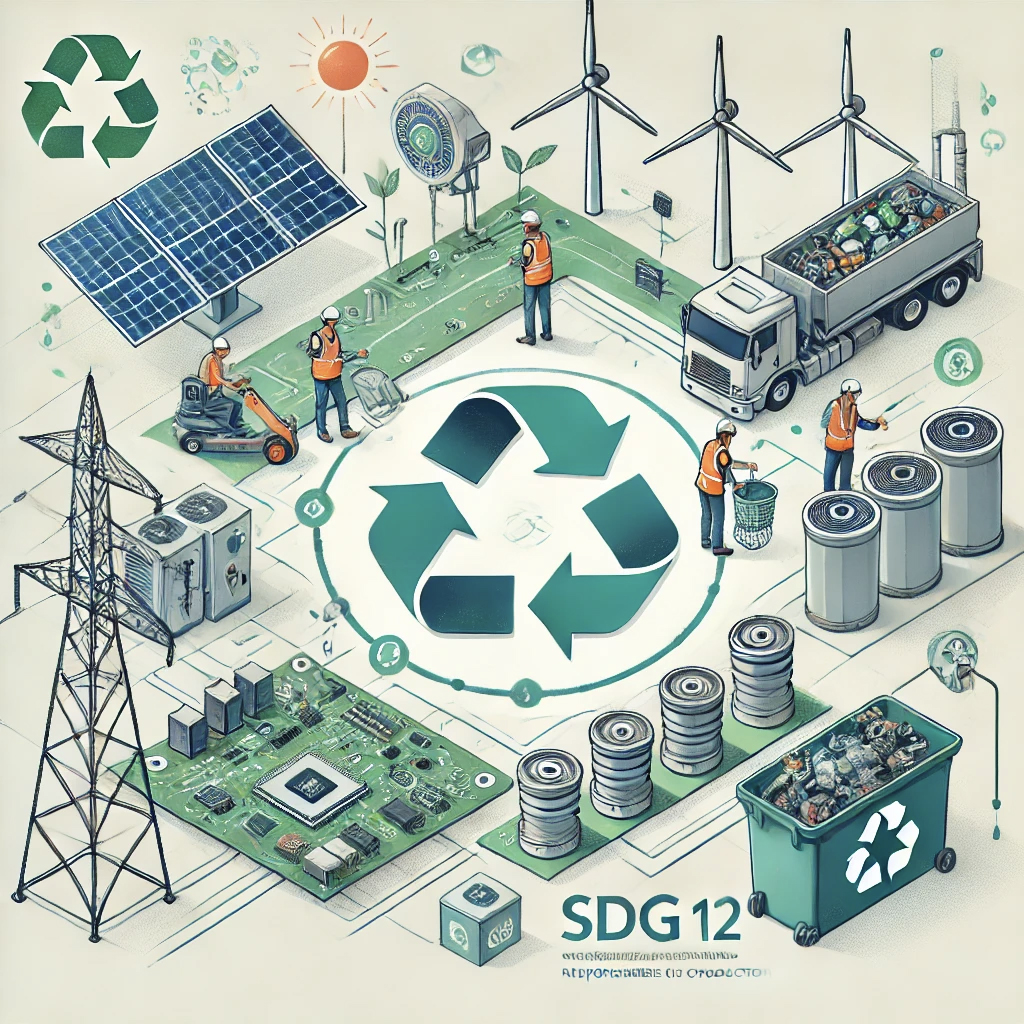
Why Circular Economy Matters in Engineering
Introduction
The world is facing rapid resource depletion and growing electronic waste, especially in the electrical and mechanical sectors. Millions of tons of waste end up in landfills, causing pollution and resource scarcity. SDG 12: Responsible Consumption and Production calls for sustainable practices to reduce waste, promote recycling, and optimize resource efficiency.
As an engineer specializing in sustainable energy, I explored circular economy principles by minimizing electrical and mechanical waste through reuse, upcycling, and recycling. This blog series highlights my journey in implementing a research-based project that aligns with SDG 12 and demonstrates how engineering can drive sustainable change.
Why Circular Economy in Engineering?
The linear economy follows a “take, make, dispose” model, leading to excessive waste. The circular economy, on the other hand, focuses on reuse, repair, and recycling to extend material lifecycles.
Key Benefits:
✅ Reduces E-Waste: Keeps hazardous materials out of landfills.
✅ Optimizes Resources: Lowers dependence on raw material extraction.
✅ Lowers Carbon Footprint: Cuts emissions from production and disposal.
✅ Cost-Effective: Saves money by repurposing materials.
✅ Supports Sustainable Energy: Extends the lifespan of renewable technologies.
Engineering’s Role in Advancing SDG 12
The engineering sector plays a crucial role in sustainability by:
- Designing for durability and repairability.
- Repurposing discarded components.
- Encouraging industries to adopt recycling initiatives.
To demonstrate this, my project focused on collecting, testing, and repurposing electrical and mechanical waste from renewable energy technologies.
A Research-Based Approach
The project was implemented in four phases:
- Collection of Discarded Components – Sourcing electronic and mechanical waste.
- Sorting & Testing – Evaluating usability for reuse or recycling.
- Upcycling Waste – Transforming materials into functional products.
- Optimizing Material Usage – Designing for minimal waste.
Each phase played a crucial role in reducing landfill waste and promoting a circular lifecycle for electronic materials.
 Zahra Blogs
Leave a comment