
Collecting Discarded Electrical Components
Introduction
One of the first steps in implementing a circular economy in engineering is sourcing reusable materials. Renewable energy systems generate significant waste, including solar inverters, batteries, transformers, and circuit boards. Instead of letting these components end up in landfills, my project focused on collecting and repurposing them to support SDG 12 and reduce e-waste.
How I Collected Electrical Components
1. Partnering with Businesses & Waste Facilities
✅ Surveyed solar farms, wind energy firms, and e-waste processing centers to identify waste sources.
✅ Partnered with e-waste collection centers to retrieve salvageable components before disposal.
✅ Encouraged proper segregation of renewable energy-related electronic wast
2. Categorizing Collected Components
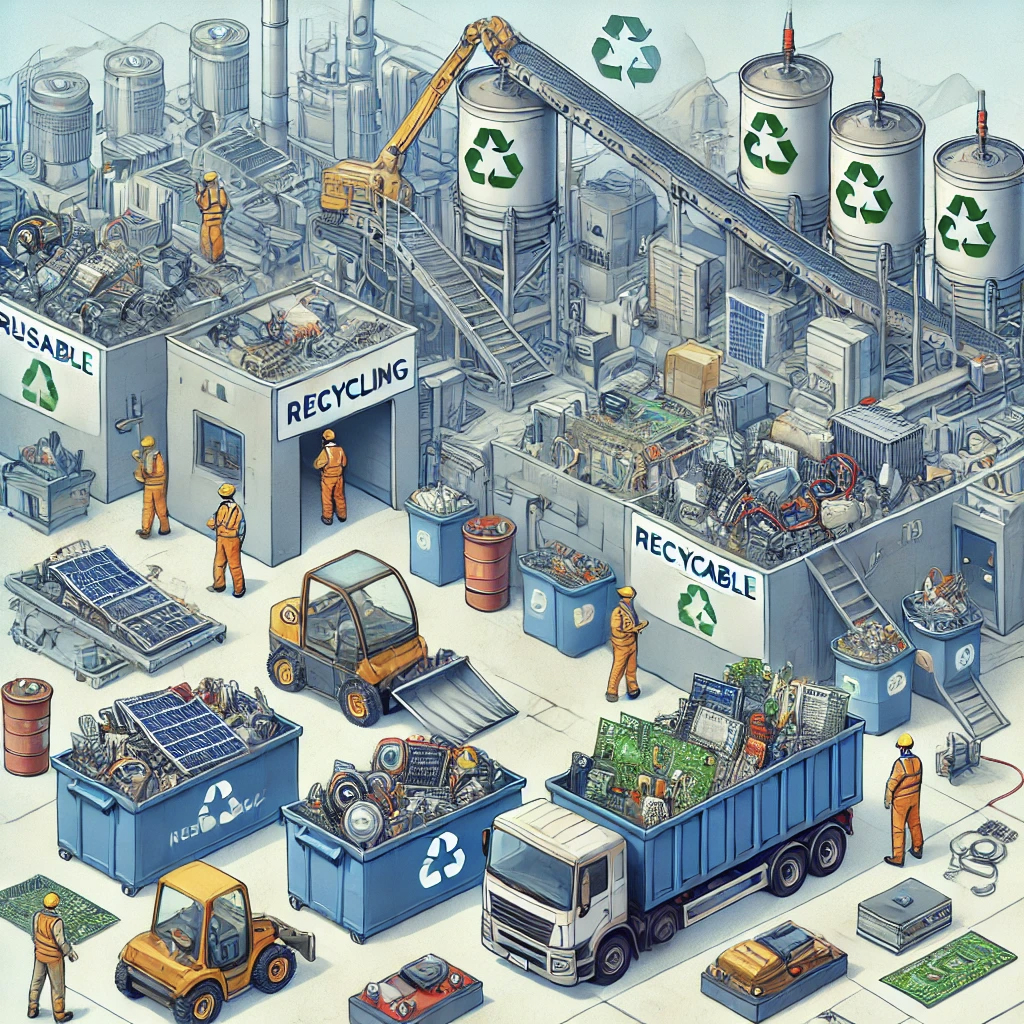
To streamline sorting and repurposing, I classified materials into:
1- Reusable Components – Fully functional or minimally damaged parts for direct reuse.
2- Repairable Components – Items needing minor repairs before reintegration.
3- Recyclable Components – Damaged parts for material recovery (copper, aluminum, lithium).
Types of Collected Components
🔋 Lithium-Ion Batteries – From EVs, solar units, and electronics, selected based on capacity retention.
⚡ Solar Inverters – Extracted from old PV systems, many with functional power conversion units.
🔌 Circuit Boards & Microcontrollers – Salvaged from power electronics and charge controllers.
🔄 Transformers & Power Converters – From old grid systems, repurposed for microgrid applications.
💡 Electric Motors & Generators – Retrieved from wind turbines and industrial machines.
Impact of Collection
🌍 Reduced landfill waste by reclaiming valuable materials.
💰 Lowered costs by providing affordable components for upcycling.
⚡ Cut carbon emissions by decreasing demand for new raw materials.
 Zahra Blogs
Leave a comment